
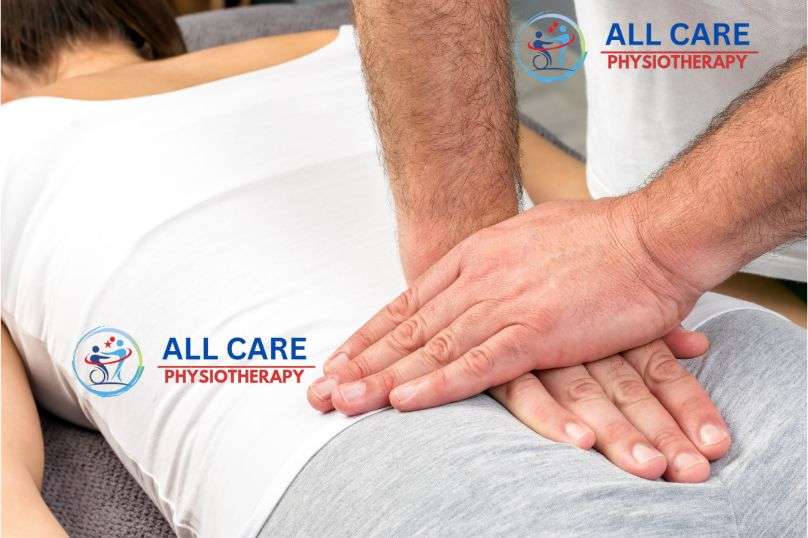
From Sitting in Pain to Sitting in Comfort: How Home Physiotherapy Helped a 42-Year-Old Woman Recover from Coccydynia
Background:
Mrs. Swati Sharma (name changed for privacy), a 42-year-old school administrator, had been suffering from tailbone pain (Coccydynia) for over 6 months. The pain began after a minor fall in her kitchen, but she initially ignored it, thinking it would subside on its own. Instead, the pain worsened over time, especially while sitting for extended periods — something unavoidable in her desk-based job.
Despite trying cushions, over-the-counter painkillers, and reducing her sitting hours, her condition didn’t improve. It eventually affected her work performance, social life, and emotional health. She reached out to All Care Physiotherapy in search of a non-surgical, long-term solution — and that’s where her recovery journey began.
Problem:
When Mrs. Sharma approached us, her main complaints included:
Sharp, burning pain in the tailbone area when sitting or rising from a chair.
Inability to sit comfortably for more than 10–15 minutes.
Disturbed sleep due to discomfort while turning in bed.
Increasing anxiety and frustration from the persistent pain.
Her posture had become guarded, and she had unknowingly started shifting her body weight awkwardly while sitting, which caused secondary pain in the lower back and hips.


Assessment by All Care Physiotherapy:
Our expert physiotherapist conducted a detailed home assessment and identified:
Localized tenderness over the coccyx (tailbone).
Tight pelvic floor and gluteal muscles, contributing to referred pain.
Poor sitting posture and incorrect ergonomics at her work desk and home seating.
Impaired pelvic alignment and core muscle weakness.
We concluded that her Coccydynia was mechanical in nature and could be effectively treated with conservative physiotherapy interventions.
Treatment Plan:
We developed a 6-week home-based physiotherapy program tailored to Mrs. Sharma’s needs. The focus was on pain relief, muscle release, posture correction, and long-term management.
✅ Pain Relief Techniques:
Cold packs for the first week to reduce inflammation.
Gentle ultrasound therapy and TENS to reduce local pain and nerve irritation.
Introduction of a donut cushion and later a wedge cushion to redistribute pressure while sitting.
✅ Pelvic Floor and Core Strengthening:
Pelvic floor muscle relaxation and activation (Kegel exercises).
Core stabilization exercises to support the lower spine and pelvis:
Pelvic tilts
Bridges
Deep abdominal contractions
✅ Manual Therapy and Myofascial Release:
Gentle soft tissue mobilization around the coccyx and pelvic floor region.
Myofascial release to reduce tightness in gluteal and piriformis muscles.
✅ Postural Retraining and Ergonomic Correction:
Teaching correct sitting posture: neutral spine, proper lumbar support, and feet flat on the floor.
Adjustments to her workstation — chair height, backrest angle, and foot support.
Training on safe movement patterns while rising from a seated position and while sleeping.
✅ Stretching and Mobility:
Gentle hip flexor, hamstring, and gluteal stretches to ease tension in connected muscle groups.
Light spinal mobility exercises to reduce overall stiffness.
Results:
Week 2: Mrs. Sharma reported a 40% reduction in pain and could sit for up to 30 minutes without discomfort.
Week 4: She noticed better posture and was able to return to work with modified sitting habits.
Week 6: Her pain reduced by over 80%, and she could sit comfortably for over an hour. She also reported improved sleep and overall confidence in movement.
By the end of the program, Mrs. Sharma resumed her professional and personal routines without fear of recurring pain. She also continued a maintenance program to strengthen her pelvic and core muscles.
Client’s Feedback:
“Before therapy, sitting was a nightmare. I dreaded meetings, meals, even movie nights with family. But now, thanks to All Care Physiotherapy, I sit comfortably, sleep better, and feel like myself again — without surgery or heavy medications.” — Mrs. Swati Sharma
Conclusion:
Coccydynia can be debilitating, but with expert physiotherapy that focuses on muscle balance, posture, and ergonomic care, recovery is not only possible — it’s sustainable. At All Care Physiotherapy, we believe in empowering our patients with the tools and techniques to overcome pain naturally, right from the comfort of their home.
Key Message for Readers:Tailbone pain doesn’t have to control your life. With expert care and personalized physiotherapy, you can sit, move, and live pain-free again.
Project Information
-
Patient Name: Mrs. Swati Sharma
-
Category: Pain Management
-
Location: Tagore Garden
-
Timeline: 28 Mar 2025 - 15 Apr 2025